





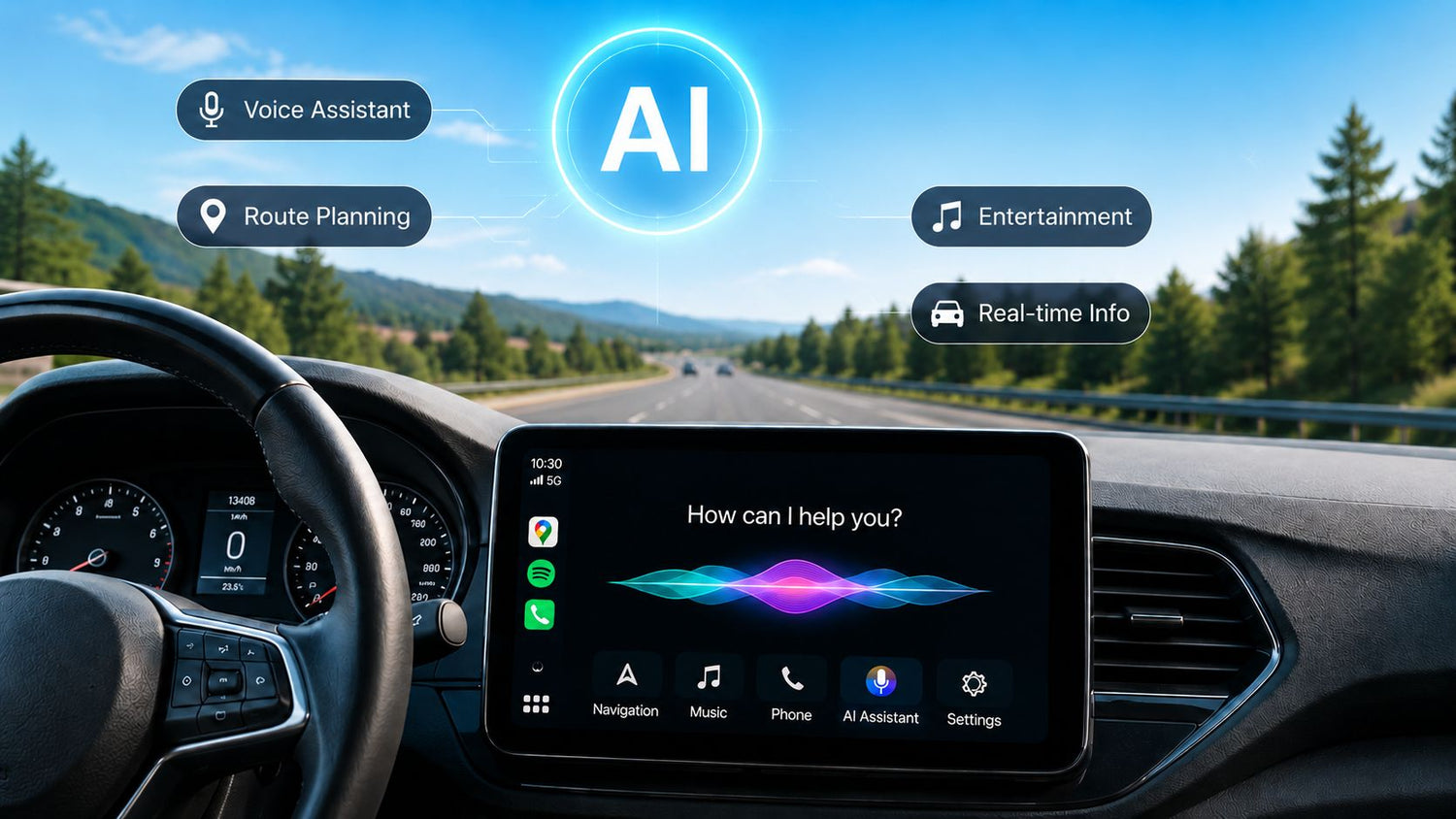
AI is appearing everywhere—from smartphones and laptops to home devices and, increasingly, cars.
But when it comes to driving, the real question isn't whether your car has “AI.”
It's whether AI can actually make everyday trips easier.
For most drivers, the useful side of in-car AI isn't about turning the vehicle into a futuristic robot. It's about reducing small tasks: searching for information, finding places, planning a route, choosing entertainment, and interacting with apps without constantly switching between your phone and dashboard.
Here are some of the ways AI can actually be useful in a car today.

1. Make Voice Commands More Conversational
Traditional in-car voice assistants usually work best with specific commands:
“Call John.”
“Play my driving playlist.”
“Navigate home.”
AI assistants can make these interactions more conversational.
Instead of remembering an exact command, you might ask:
“Find a coffee shop along my route that's still open.”
Or:
“What are some good lunch stops before I reach San Diego?”
The difference is subtle but important. You're asking a question naturally rather than learning how the car wants you to phrase it.
For drivers, that's probably one of the most practical uses of AI.
2. Help Plan Stops During a Road Trip
Long-distance driving involves more decisions than simply following a route.
Where should you stop for lunch?
When should you refuel?
What's worth seeing nearby?
Are there family-friendly places along the way?
An AI assistant can help organize these questions before or during a stop.
For example, instead of searching through several apps individually, you could ask for ideas for restaurants, attractions or useful stops near your route and then open your preferred navigation app to continue the trip.
AI doesn't replace navigation—it can make the planning around navigation easier.

3. Find Information Without Digging Through Your Phone
Sometimes you just need a quick answer.
You might want to know how late a destination stays open, what the weather will be like when you arrive, or what attractions are nearby.
Normally, that means reaching for your phone and searching manually.
An AI assistant can reduce some of that friction by providing information through a more conversational interface.
There's an important distinction here, though: AI should reduce distraction, not create another reason to stare at a screen while driving.
Complex searches and detailed interactions are still better handled while parked or by a passenger.
4. Make the Dashboard More Useful Beyond Navigation
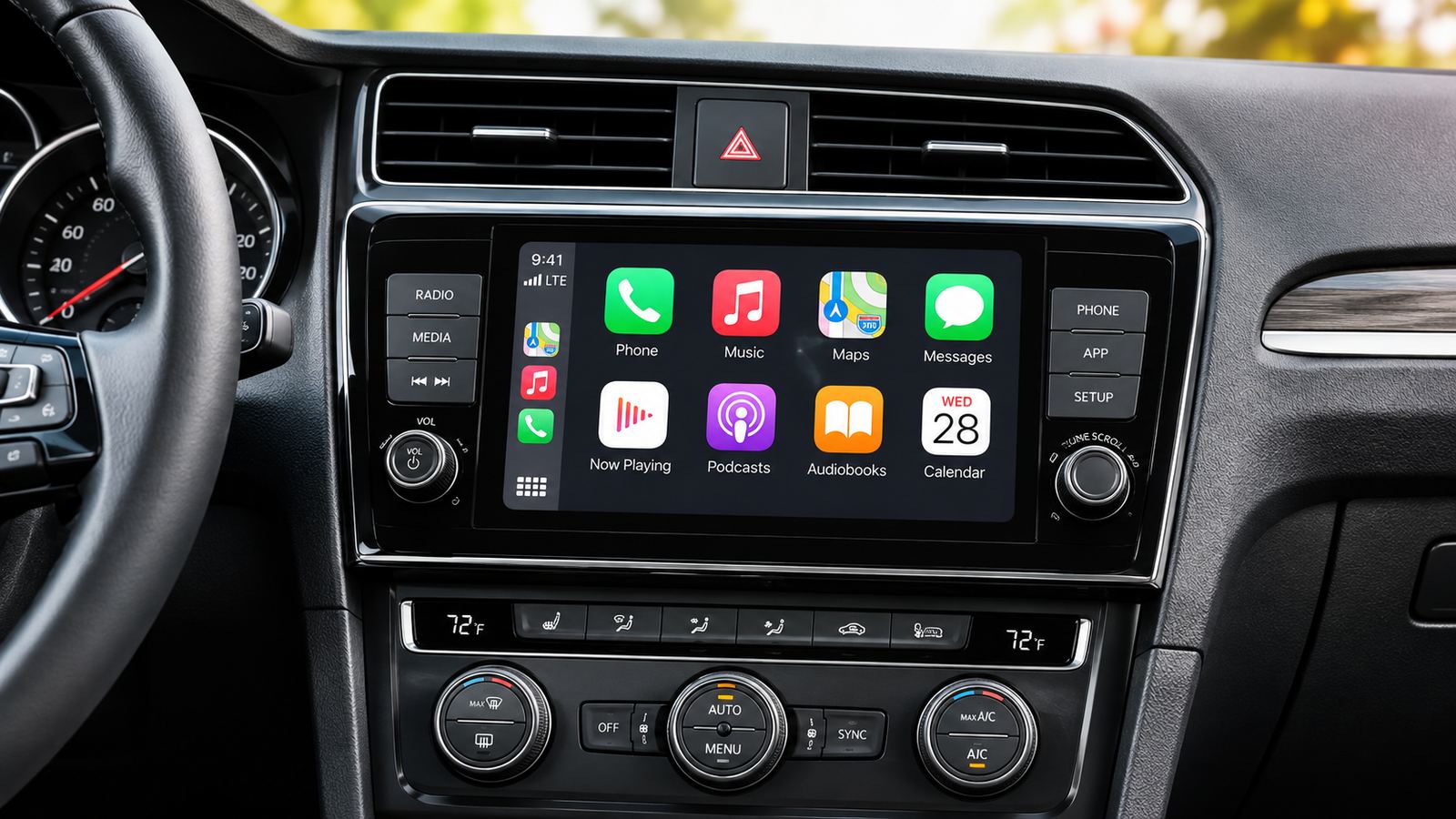
Most factory CarPlay and Android Auto systems are intentionally streamlined.
That's a good thing for driving. Navigation, calls, messages and music cover most everyday needs.
But some drivers want their dashboard to do more when the vehicle is parked.
An Android-based system can expand what's available beyond the traditional CarPlay interface, including compatible apps, online services and AI assistants.
This can be particularly useful during road-trip stops, charging sessions, pickup waits or other times when you're sitting in the car but not actively driving.
5. Combine AI With Navigation and Other Apps
AI becomes more interesting when it isn't treated as a standalone feature.
Imagine planning a trip with an AI assistant, checking possible stops, opening Google Maps or Waze for navigation, and using Spotify for the drive.
Instead of thinking about “AI in the car” as one feature, it's better to think of it as another layer within a connected dashboard.
That's where access to apps and reliable connectivity become important.
Without internet access or compatible services, even the smartest assistant becomes much less useful.
Do You Need to Buy a New Car to Get These Features?
Not necessarily.
Many newer vehicles are beginning to integrate more sophisticated software and AI features directly into their infotainment systems.
But replacing an otherwise perfectly good car just to get a smarter dashboard obviously doesn't make much sense.
There are also aftermarket ways to expand what an existing infotainment system can do.
For vehicles with a compatible factory CarPlay or Android Auto system, a CarPlay AI box is one option.
Rather than replacing the factory stereo or installing an entirely new display, these devices use the existing screen while adding a more capable Android-based environment.
For example, the LAMTTO RC31 5G LTE CarPlay AI Box combines Android 15, Google Play access, built-in 5G connectivity, independent GPS and support for AI services such as Gemini.
That means AI isn't really the whole point.
The bigger benefit is bringing connectivity + apps + navigation + AI into one dashboard environment instead of depending on your phone for every task.

What AI Still Can't—and Shouldn't—Do
It's easy to overstate what automotive AI can do.
AI doesn't make a driver safer automatically, and it doesn't replace your judgment.
It can also produce incorrect information.
That's especially important when asking about directions, road conditions, safety information or anything else that could affect your driving decisions.
And while video, apps and more advanced interfaces can be useful when parked or for passengers, they should never become a distraction for the driver.
The best in-car technology should require less attention, not more.
So, Is AI in Your Car Actually Useful?
For some drivers, absolutely.
But probably not for the reasons the phrase “AI-powered car” might suggest.
The most useful AI features today are surprisingly practical:
helping you find information faster, planning stops, interacting with your dashboard more naturally, and reducing how often you need to move between different devices and apps.
If you only use your car screen for navigation and music, you may not need anything more.
But if you spend a lot of time on the road and want navigation, apps, connectivity and AI to work together more independently from your phone, upgrading the existing dashboard may make more sense than replacing the entire infotainment system—or the car itself.
AI doesn't need to take over the driving experience to be useful. It just needs to make the everyday parts of driving a little easier.


Napsat komentář
Všechny komentáře jsou před zveřejněním moderovány.
Tento web je chráněn službou hCaptcha a vztahují se na něj Zásady ochrany osobních údajů a Podmínky služby společnosti hCaptcha.