




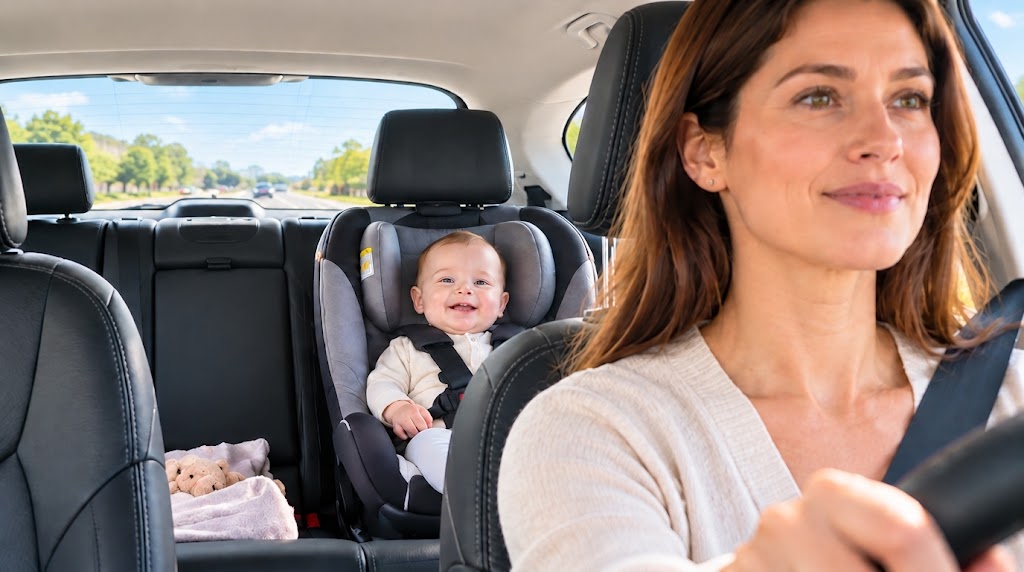
Rear-facing car seats are an important part of traveling with babies and young children, but they create one challenge almost every parent recognizes: you can't easily see what's happening in the back seat.
Your baby suddenly becomes quiet. Are they asleep? Did the pacifier fall out? Are they uncomfortable?
It can be tempting to turn around for a quick look, especially during a long drive or at night. But when you're behind the wheel, your attention belongs on the road.
Fortunately, there are safer and more convenient ways to keep an eye on a rear-facing baby without constantly looking back.
Why Is It So Hard to See a Baby in a Rear-Facing Car Seat?
A rear-facing car seat positions your baby facing the back of the vehicle. From the driver's seat, that means you usually can't see your baby's face directly.
This becomes particularly noticeable when:
- Your baby suddenly starts crying
- The back seat becomes unusually quiet
- You're driving at night
- You're traveling alone with your baby
- You're taking a longer family road trip
The natural reaction is often to turn around.
The better approach is to set up your car so that you can get the information you need with as little distraction as possible—and to pull over safely whenever your baby actually needs attention.

Option 1: Use a Baby Car Mirror
One of the simplest solutions is a baby car mirror.
These mirrors are typically attached to the rear headrest and positioned toward a rear-facing child. The driver can then see the baby's reflection through the vehicle's rearview mirror.
Why Parents Like Baby Mirrors
Baby mirrors are popular for good reasons. They're relatively inexpensive, don't require a power source, and can usually be installed in just a few minutes.
For daytime driving, a properly positioned mirror may be all some families need.
Where Mirrors Can Be Less Convenient
The experience can change depending on the vehicle and driving conditions.
At night, for example, it may be difficult to clearly see your baby's face. Lighting, viewing angles and reflections can also affect visibility.
You also need to look into the rearview mirror and then at the baby mirror, rather than getting a direct view of the back seat.
For parents who frequently drive at night or take longer trips, this is one reason they may consider a camera instead.
Option 2: Use a Baby Car Camera
A baby car camera replaces the reflected image of a mirror with a live video feed.
A small camera is positioned toward the baby's car seat, while the image is displayed on a screen closer to the driver's normal field of view.
This can make it easier to answer simple questions at a glance:
Is the baby sleeping?
Did the pacifier fall out?
Are they still sitting comfortably?
Why did they suddenly start crying?
Some cameras also offer night vision, which can be particularly useful when the rear cabin is dark.
The goal isn't to continuously watch the screen while driving. It's to reduce the need to physically turn around when you simply want to understand what's happening in the back seat.

Baby Car Mirror vs. Baby Car Camera
There isn't one setup that works best for every family.
A mirror is simple and doesn't require electronics. If most of your driving happens during the day and visibility is good, it may be perfectly adequate.
A camera may make more sense if you regularly drive at night, travel long distances, or want a clearer view of a rear-facing child.
When considering a baby car camera, look beyond resolution alone.
Useful features can include:
- A clear live image
- Good low-light or night visibility
- A wide viewing angle
- Low video delay
- Simple installation
- A camera angle that can be adjusted easily
- Privacy-focused local video
- A display that's easy to glance at without adding unnecessary clutter
That last point is particularly important.
Do You Really Need Another Screen on Your Dashboard?
Many traditional baby car camera systems come with their own monitor.
That works, but it also means finding somewhere to install another screen, routing additional cables and adding another device to the dashboard.
Modern cars already have increasingly large infotainment displays.
So instead of asking:
"Where can I put another monitor?"
There's another question worth asking:
"Can I use the screen that's already in my car?"
That's where newer approaches to in-car baby monitoring become interesting.

Using Your Existing CarPlay Screen to See the Back Seat
Some newer systems can bring the rear-seat camera view directly to a vehicle's existing infotainment display instead of requiring a separate monitor.
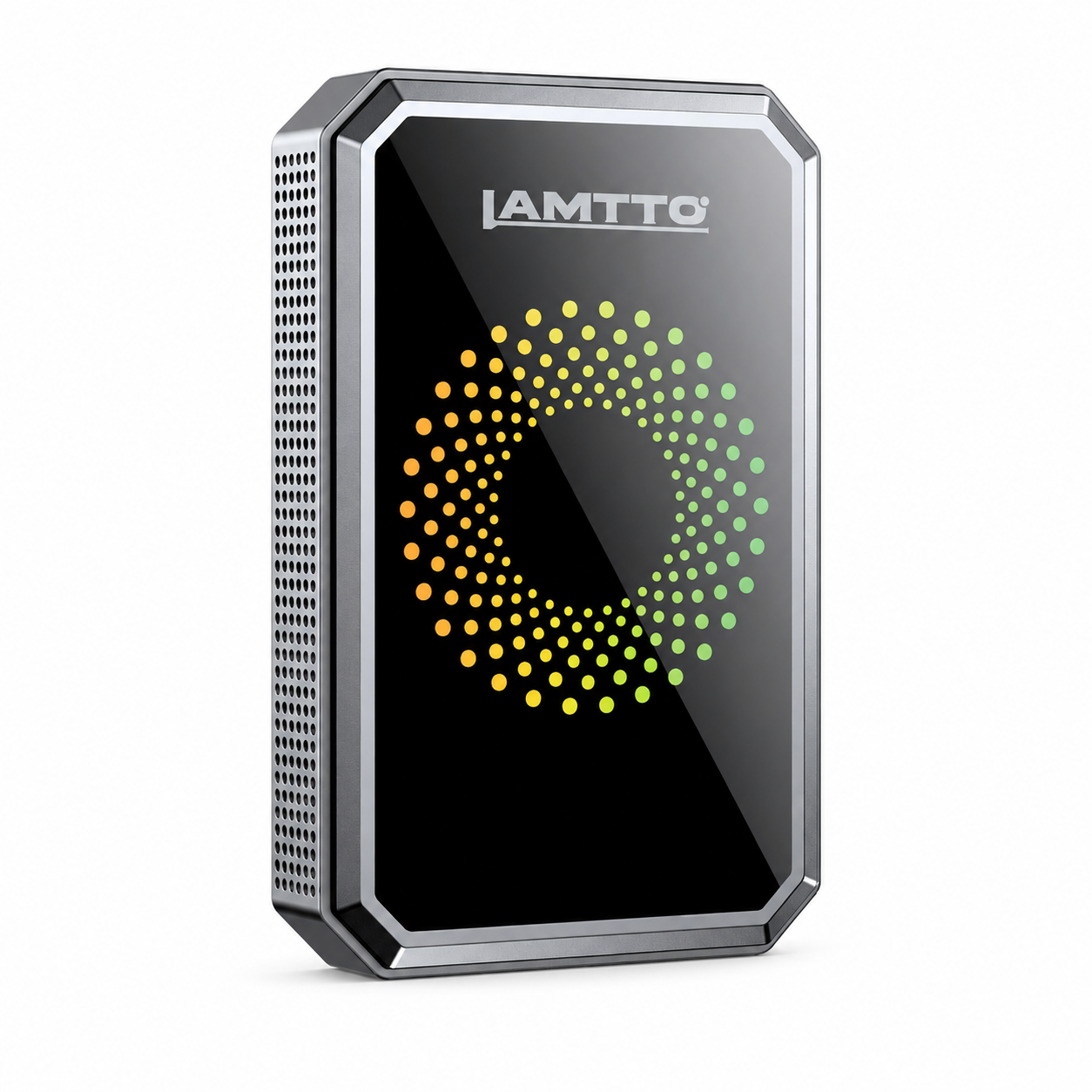
For example, the LAMTTO RC38 combines a rear-seat baby camera with a wireless CarPlay adapter.
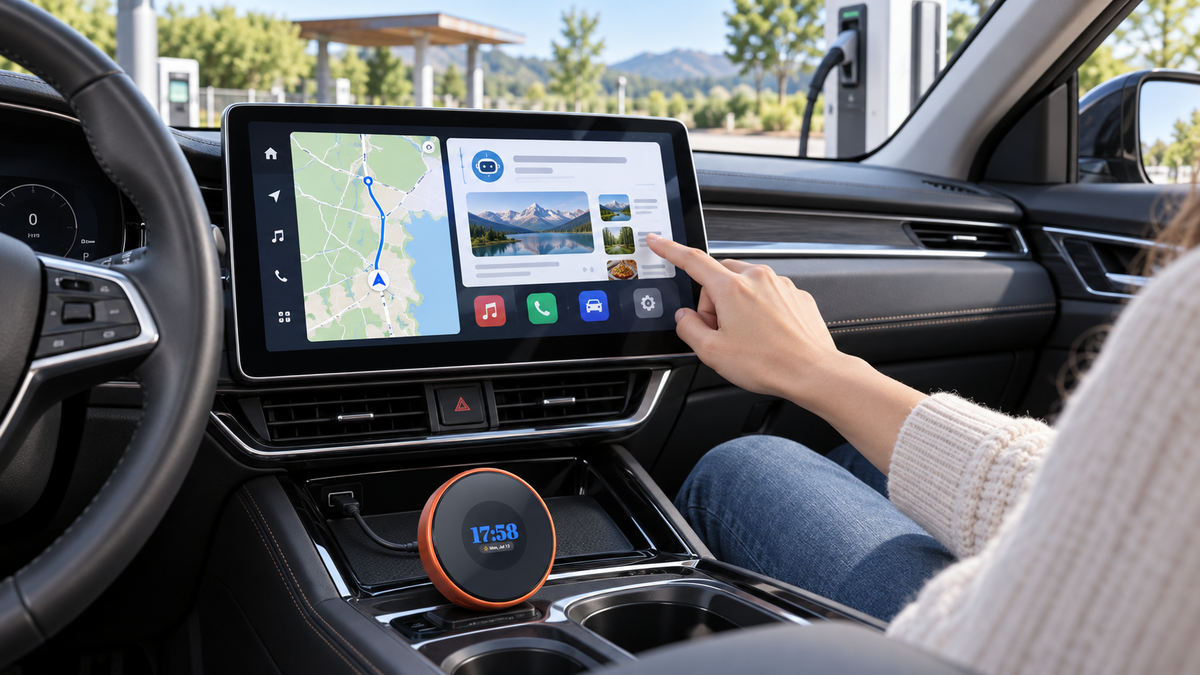
In compatible vehicles, the camera feed can be displayed directly on the car's existing CarPlay screen. That means parents don't have to mount another monitor on the dashboard just to see the back seat.
The RC38 uses a 1080P camera with a 150° adjustable viewing angle, helping cover the baby's seating area while allowing the camera position to be adjusted for different vehicles and car-seat setups.
For nighttime drives, the camera also provides night visibility so parents can check the back seat when the cabin is dark.
Navigation and Baby View Can Work Together
One of the challenges with using an infotainment screen for anything other than navigation is that you may still need directions while driving.
A useful setup shouldn't force you to constantly choose between the two.
The RC38 can display navigation alongside the rear-seat camera view, allowing you to keep directions available while also having visual access to the back seat.
For a family road trip, that can be more practical than installing a completely separate display.
You still have your familiar CarPlay environment for navigation, music and calls, while the baby camera adds another layer of visibility when needed.
Privacy Matters With an In-Car Baby Camera
Parents may also want to consider what happens to camera footage.
A baby monitor in the car doesn't necessarily need cloud storage or remote uploading. Its main job is simply to help you see what's happening a few feet behind you.
The RC38 is designed around local, real-time viewing rather than cloud-based monitoring, helping keep the experience simple and private.
For many families, that's exactly what an in-car camera needs to do—and nothing more.
When Should You Pull Over Instead?
No mirror, camera or in-car display replaces actually checking on your child when something seems wrong.
If your baby needs feeding, their car-seat position needs adjusting, they're crying persistently, or you have any concern about their safety or well-being, find a safe place to stop before attending to them.
A camera can help you understand what's happening.
It shouldn't encourage you to solve a back-seat problem while the vehicle is moving.
The same applies to the screen itself. A quick glance can provide information, but watching the video continuously would simply create another distraction.
Think of a baby camera as an extra set of eyes—not a replacement for safe driving habits.
A Better Setup Starts Before the Drive
The easiest way to avoid distractions is to prepare before leaving.
Before starting your trip:
- Make sure the car seat is correctly installed
- Position the mirror or camera before driving
- Check that you have a clear view of your baby
- Keep essential baby items within reach for when you're parked
- Set your navigation before moving
- Plan stops during longer journeys
If you're using a camera, test its angle during both daylight and darkness.
A few minutes of preparation can prevent a lot of adjustments once you're already on the road.
The Goal Isn't to Watch Your Baby Every Second
Parents don't need another screen demanding their attention.
What they often need is reassurance.
Being able to quickly see that your baby is sleeping comfortably can remove the uncertainty that makes you want to turn around in the first place.
For some families, a simple baby mirror will do the job. For others, especially those who drive frequently at night or take longer trips, a baby car camera may provide a clearer view.
And if your vehicle already has a CarPlay screen, solutions such as the LAMTTO RC38 Baby Monitor Camera with Wireless CarPlay Adapter offer another option: bringing the rear-seat view onto a screen that's already part of your car.
Less dashboard clutter. Less guessing about what's happening behind you.
And more attention where it matters most—on the road ahead.


Dejar un comentario
Todos los comentarios se revisan antes de su publicación.
Este sitio está protegido por hCaptcha y se aplican la Política de privacidad de hCaptcha y los Términos del servicio.