





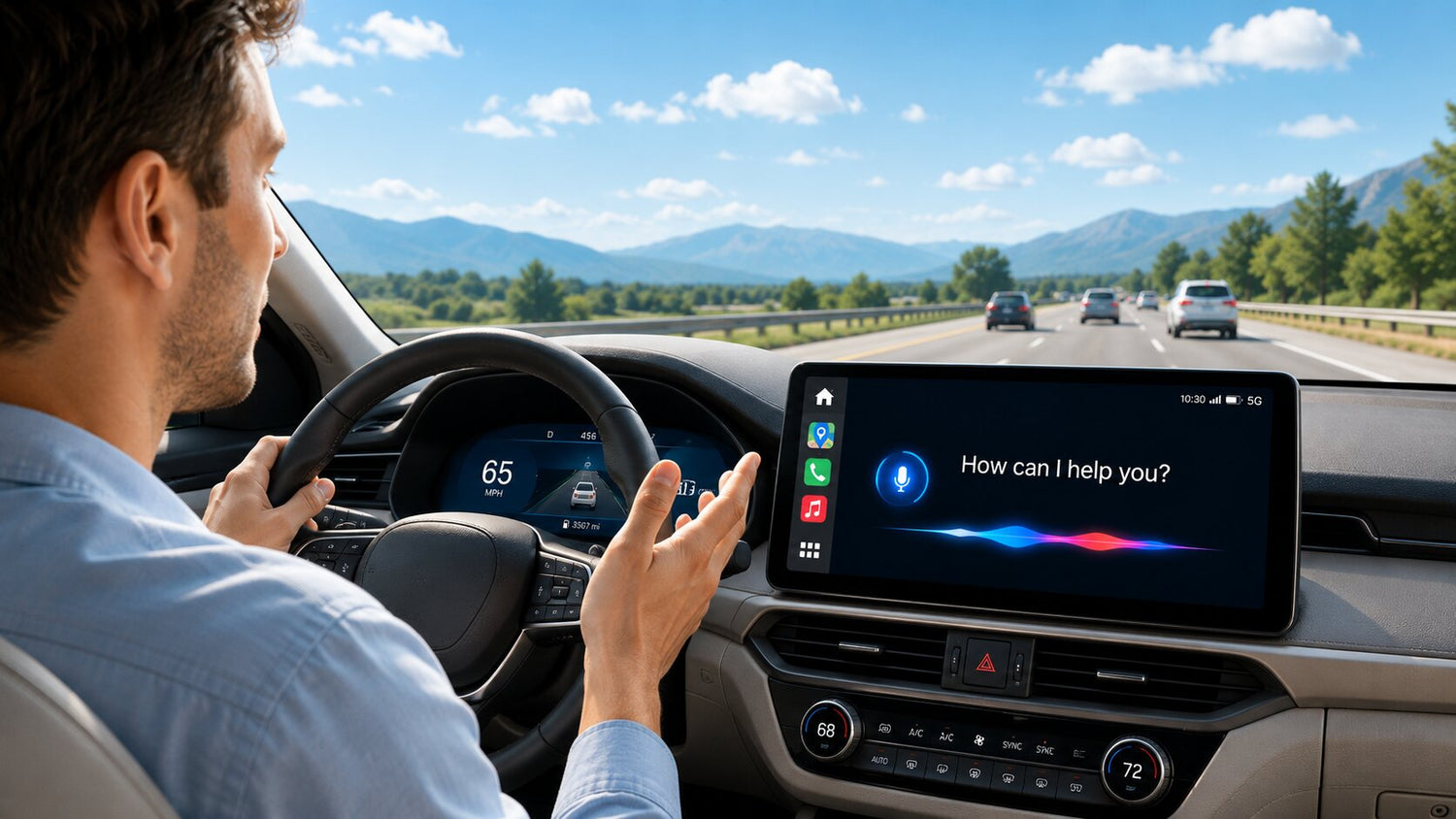
L'intelligence artificielle est de plus en plus présente dans les appareils de la vie courante, des smartphones aux enceintes intelligentes en passant par les téléviseurs et les ordinateurs.
Plus récemment, l'IA a également commencé à apparaître dans les accessoires automobiles et les systèmes d'infodivertissement.
Un exemple est Gemini AI, la dernière technologie d'assistant IA de Google. Certains nouveaux écrans de voiture et boîtiers IA ont commencé à intégrer des fonctionnalités basées sur Gemini pour offrir une expérience d'interaction vocale plus conversationnelle.
Mais dans quelle mesure Gemini AI change-t-elle réellement l'expérience de conduite ?
La réponse dépend en grande partie de la façon dont vous utilisez votre véhicule, de la fréquence à laquelle vous utilisez les commandes vocales et de ce que vous attendez de la technologie embarquée.
Les assistants vocaux dans les voitures ne sont pas une nouveauté
Les conducteurs utilisent des assistants vocaux depuis des années.
Exemples :
- Siri
- Google Assistant
- Alexa
Ces systèmes sont couramment utilisés pour :
- passer des appels,
- envoyer des messages,
- définir des destinations,
- et contrôler la lecture de musique.
Cependant, de nombreux utilisateurs ont rencontré des situations où les commandes doivent être prononcées d'une manière très spécifique pour obtenir le résultat souhaité.
Les assistants vocaux traditionnels fonctionnent souvent mieux lorsque les utilisateurs suivent des commandes prédéfinies.
Interaction vocale plus naturelle
Un avantage potentiel des nouveaux assistants IA tels que Gemini est leur capacité à comprendre un langage plus naturel par rapport aux assistants vocaux traditionnels.
Au lieu de mémoriser des phrases exactes, les utilisateurs peuvent s'exprimer de manière plus conversationnelle.
Par exemple, plutôt que de dire :
« Naviguer vers la station-service la plus proche. »
Un utilisateur pourrait demander :
« Trouver une station-service bien notée sur mon itinéraire. »
Ou :
« Où puis-je m'arrêter pour prendre un café avant d'arriver au centre-ville ? »
L'objectif n'est pas nécessairement d'ajouter de nouvelles fonctions, mais de rendre les interactions plus naturelles et de réduire la nécessité de répéter les commandes.
Bien sûr, les performances réelles peuvent varier en fonction de la connectivité Internet, des mises à jour logicielles et de l'implémentation spécifique du système d'IA.
L'IA peut aider avec les tâches de navigation
La navigation est un domaine où l'IA a le potentiel d'être utile.
Les conducteurs recherchent fréquemment des informations telles que :
- les stations-service à proximité,
- les restaurants,
- les lieux de stationnement,
- les bornes de recharge,
- ou les conditions de circulation.
Dans certaines situations, un assistant vocal IA conversationnel peut réduire le nombre de pressions sur l'écran nécessaires pour trouver ces informations.
Plutôt que de naviguer manuellement dans les menus, les utilisateurs peuvent poser des questions directement à l'aide de commandes vocales.
Cependant, la qualité des réponses dépend toujours de facteurs tels que :
- la connectivité Internet,
- les services de cartographie,
- les mises à jour logicielles,
- et les sources de données disponibles.
Par conséquent, l'expérience peut varier entre les utilisateurs et les lieux.
Le contrôle vocal peut réduire certaines interactions avec l'écran
L'un des plus grands défis à l'intérieur de tout véhicule est la distraction.
Chaque fois qu'un conducteur recherche une destination, modifie des paramètres ou fait défiler des menus, son attention est partagée entre la conduite et le système d'infodivertissement.
L'interaction vocale n'est pas une solution parfaite, mais elle peut réduire certaines interactions manuelles avec l'écran.
Des tâches telles que :
- l'ouverture d'applications,
- la recherche de destinations,
- le changement de listes de lecture,
- ou la recherche d'informations
peuvent parfois être effectuées via des commandes vocales au lieu de plusieurs pressions sur l'écran.
Pour certains conducteurs, cela peut être l'une des utilisations les plus pratiques des assistants basés sur l'IA.
Cela dit, les assistants vocaux ne remplacent pas les habitudes de conduite sûre et ils nécessitent toujours une utilisation responsable.
Le divertissement est un autre domaine où l'IA peut être utile
Les écrans de voiture modernes sont de plus en plus utilisés pour d'autres fonctions que la navigation.
De nombreux conducteurs utilisent leurs écrans pour :
- la musique,
- les podcasts,
- les services de streaming,
- et le divertissement à l'arrêt.
Un assistant IA peut aider les utilisateurs à trouver du contenu plus efficacement en comprenant les requêtes exprimées en langage courant.
Par exemple :
« Joue une playlist relaxante pour un road trip. »
ou
« Trouve un podcast sur la technologie. »
Ces requêtes sont relativement simples, mais elles illustrent comment l'IA conversationnelle peut rendre les contrôles multimédias plus naturels.
L'utilité de cette fonction dépend souvent de la fréquence à laquelle une personne utilise les commandes vocales dans sa vie quotidienne.
L'IA est utile, mais ce n'est pas de la magie
Il est important de garder des attentes réalistes.
Malgré les progrès rapides de l'intelligence artificielle, les systèmes d'IA embarqués actuels ont encore des limites.
L'expérience peut varier en fonction de :
- la qualité de la connexion Internet,
- la compatibilité des applications,
- les versions logicielles,
- les performances matérielles,
- et les services en arrière-plan.
L'IA peut aider les utilisateurs à trouver des informations plus efficacement, mais elle ne peut pas éliminer toutes les frustrations associées à la technologie.
Dans de nombreuses situations, une navigation stable, une connectivité fiable et des performances d'application fluides restent plus importantes que les seules fonctionnalités d'IA.
Comment RC26 utilise Gemini AI
Un exemple de produit qui inclut l'intégration de Gemini AI est le LAMTTO RC26.
En plus de :
- CarPlay sans fil,
- Android Auto sans fil,
- la prise en charge de Google Play,
- les applications de streaming,
- la sortie HDMI,
- et les téléchargements d'applications,
le RC26 inclut également Gemini AI dans sa plateforme basée sur Android.
Cependant, de nombreux utilisateurs peuvent trouver que l'accès à Google Play de l'appareil, la flexibilité des applications, les capacités de streaming et la connectivité sans fil sont plus pertinents pour une utilisation quotidienne que l'IA elle-même.
Dans ce cas, Gemini AI peut être considérée comme une fonctionnalité supplémentaire plutôt que la raison principale pour laquelle quelqu'un choisirait l'appareil.
À qui Gemini AI pourrait être utile ?
Gemini AI peut être utile aux conducteurs qui :
- utilisent fréquemment les commandes vocales,
- dépendent fortement de la navigation,
- passent de longues heures sur la route,
- préfèrent l'interaction mains libres,
- ou aiment expérimenter les nouvelles technologies.
D'un autre côté, les conducteurs qui utilisent principalement CarPlay pour la navigation et la musique remarqueront moins de différences au quotidien.
Comme beaucoup de technologies émergentes, la valeur dépend souvent des habitudes et des attentes individuelles.
Dernières réflexions
Gemini AI est encore un ajout relativement nouveau à de nombreux systèmes embarqués.
Bien qu'elle puisse rendre certaines interactions vocales plus naturelles, l'expérience de conduite globale dépend toujours largement de la qualité de la navigation, de la compatibilité des applications, de la connectivité et du véhicule lui-même.
Pour les conducteurs qui utilisent déjà régulièrement les commandes vocales, les fonctionnalités d'IA peuvent offrir une commodité supplémentaire. Pour d'autres, la différence peut être moins perceptible.
À son stade actuel, Gemini AI est probablement mieux considérée comme une amélioration optionnelle plutôt qu'une fonctionnalité qui change fondamentalement la façon dont les gens conduisent.
À mesure que la technologie de l'IA continue d'évoluer, il sera intéressant de voir comment les assistants conversationnels seront intégrés dans les futurs systèmes d'infodivertissement. Pour l'instant, les avantages les plus pratiques proviendront probablement d'interactions vocales plus simples et d'un accès plus facile à l'information sur la route.


Laisser un commentaire
Tous les commentaires sont modérés avant d'être publiés.
Ce site est protégé par hCaptcha, et la Politique de confidentialité et les Conditions de service de hCaptcha s’appliquent.